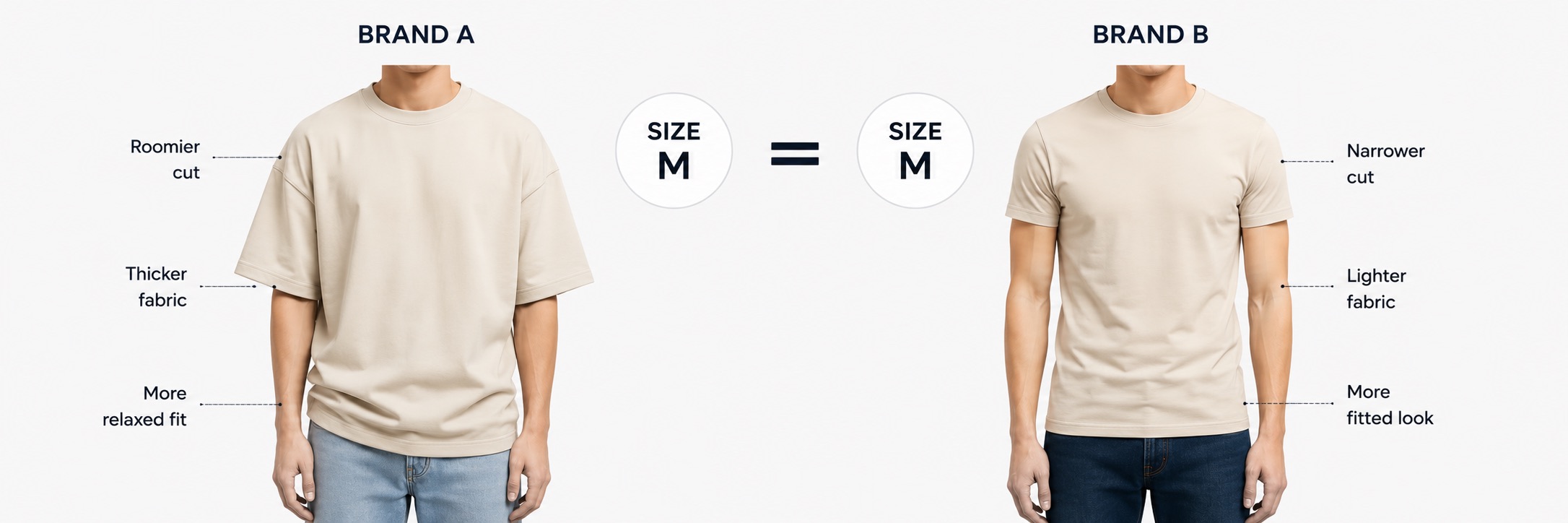
A size S, EU 38 or the same waist number on a label does not guarantee the same fit across different brands. That is why shoppers are often surprised: the size looks familiar, but the garment feels completely different. In practice this is normal because size is shaped not only by numbers but also by cut, fabric, intended fit and the brand’s own pattern system.
Every brand builds its own pattern
Brands do not start from the same base block. Some leave more room in the waist, some in the hips, some in the shoulders. Even when the chart looks close, the garment can still sit differently because the shape of the piece is different.
Fabric matters too
A stretchy T-shirt, rigid jeans and a structured blazer behave very differently. The label size does not fully describe how much a fabric moves, whether a lining changes the feel or whether the item was designed as relaxed, regular or slim fit.
How to deal with this in practice
Start with your baseline using the universal size charts. Then compare that baseline with the specific brand page, look at the fit description and think about the garment type. This is far more reliable than trusting a single familiar letter or number.
Why this matters for online shopping
Once you understand that the same size label does not mean the same fit, the process becomes much calmer. You stop searching for one magical number and instead compare your measurements, the universal chart and the specific brand in a predictable order.
What shapes the fit beyond the label
The size on the tag is only a short label. Real fit depends on pattern blocks, fabric behaviour, stretch, rise, length and the intended silhouette of the garment. Two items marked with the same letter or number can feel completely different if one was designed to be relaxed and the other to sit close to the body.
Why articles and charts should work together
Once you understand why the fit changes across brands, size charts become much more useful. It helps to start with universal charts, continue with the brand page and only then decide whether you need more room or a neater fit for a specific item.
How to reduce sizing mistakes
- Compare not only the size number but also the fit description.
- Pay attention to fabric: rigid denim and stretchy knitwear behave very differently.
- Think about category: top, bottom, dress or outerwear.
- If the brand is already present in Unisizer, use its size tables instead of trusting the tag alone.