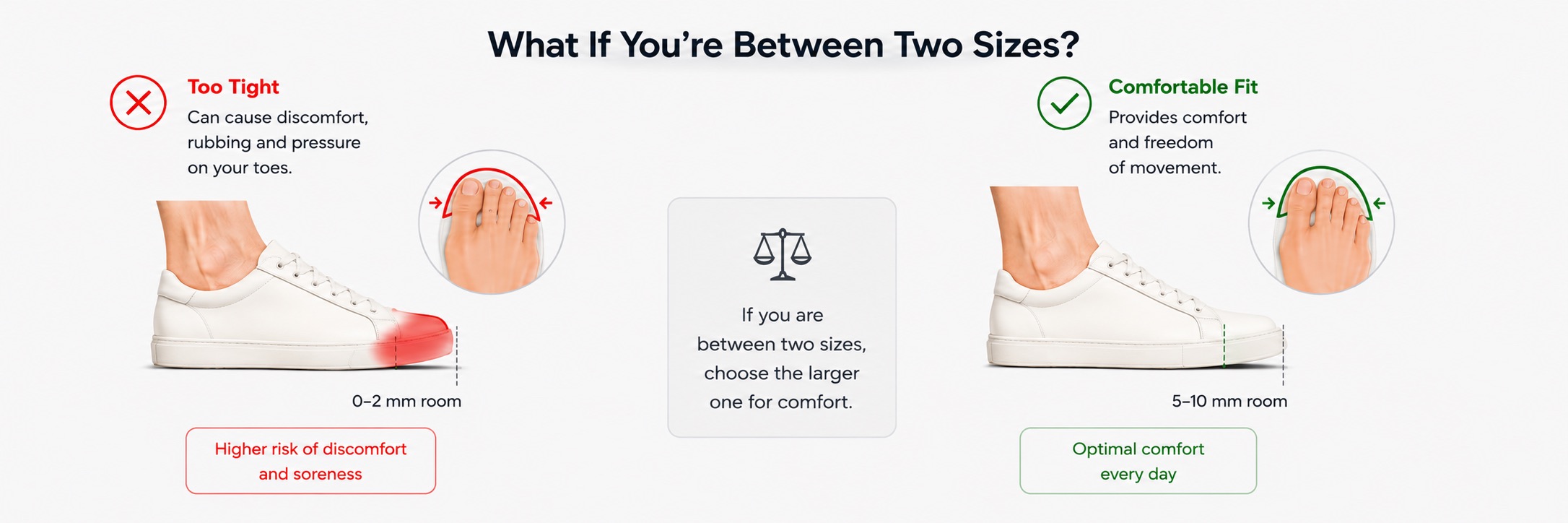
Being between two shoe sizes is extremely common. Your foot length no longer fits comfortably into one range, but it does not fully reach the next one either. In that situation it is better to think about fit, shoe type and how you plan to wear the pair instead of guessing from the label alone.
Why this happens
A universal size chart gives you a stable baseline, but it cannot predict every difference between models. Last width, material stiffness, toe shape and sock thickness all influence how the same size feels in practice.
When the smaller option can work
The smaller size may still work if the shoe is soft, stretches a little with wear or already runs roomy. That only makes sense when your measurement is very close to the upper end of the smaller range and there is no pressure on the toes.
When it is safer to size up
If the shoe is firm, made for long walking, winter wear or thicker socks, a little extra room is often the calmer choice. In that case it is usually better to move up and then double-check the fit against brand-specific guidance.
How to make the final call
Return to the shoe size chart, look at how close you are to the upper boundary and then compare the result with the brand size database. If doubt remains, choose based on the real use case: office wear, sports, long walks or cold-weather shoes.
When the smaller size can make sense
The smaller of two neighbouring sizes makes sense only when the shoe is naturally soft, flexible and not meant for thick socks. That is more common in casual trainers, some loafers and styles with forgiving uppers. Even then, the decision should come from real fit and comfort, not from hope that the pair will stretch later.
When the larger size is safer
For winter footwear, dense boots, hiking models or any pair that needs more working room, the larger size is usually the safer choice. This becomes even more important when your measurement already sits near the upper edge of a range. In that situation it helps to recheck the universal shoe chart and then compare it with the brand.
Extra points to remember
- Use the longer foot as your reference.
- Toe shape changes the feel more than many shoppers expect.
- Evening measurements are often more reliable than early morning ones.
- If the style feels borderline, look for the brand size page, not just the generic label.