If your measurements are inaccurate, even a good size chart becomes much less useful. That is why the most valuable starting point is not the letter you usually wear but your actual chest, waist and hip numbers. Once you have them, it becomes easier to use universal size charts and compare them with brand-specific tables.
What to measure first
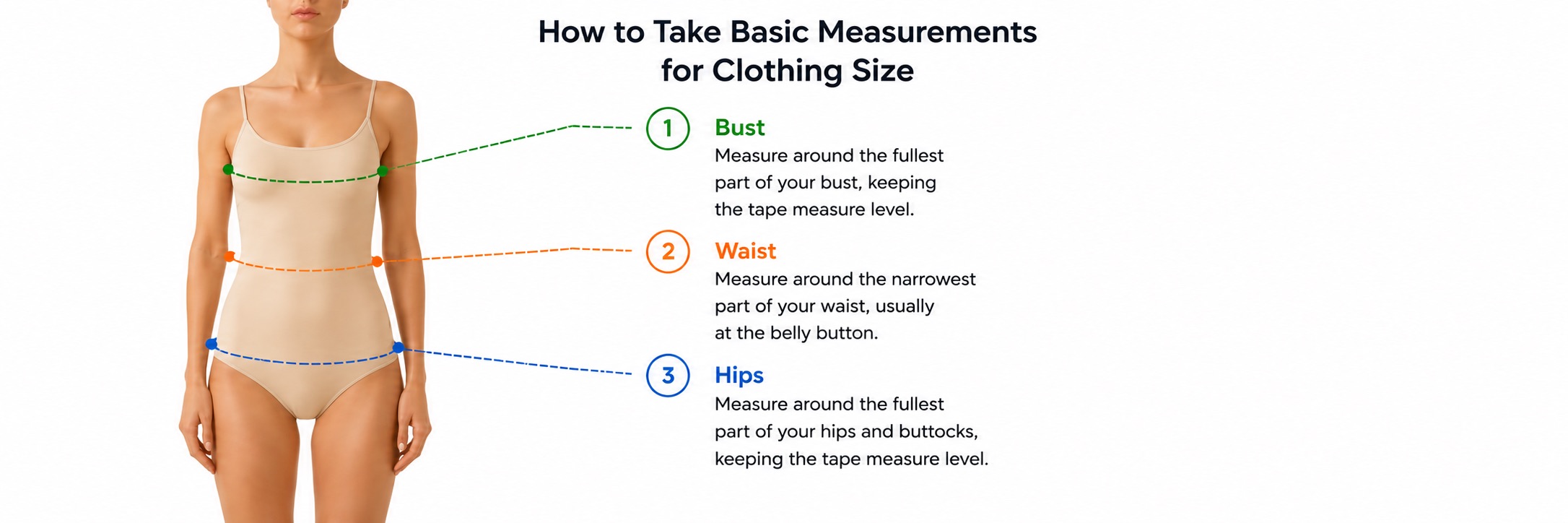
For most everyday clothing, three core points are enough: chest, waist and hips. In some cases you may also need sleeve length, inseam or shoulder width, but the basic trio is the most useful place to start.
How to measure correctly
Keep the measuring tape level and close to the body without pulling it tight. Measure the chest at the fullest point, the waist at its narrowest natural point and the hips at the widest part. It is best to measure over light clothing or underwear while standing naturally.
What to do next
Write the numbers down and compare them with the universal clothing size hub. This helps you find your baseline range before you move to a specific brand. If the fit matters a lot, also compare your numbers with the brand size database and any available fit notes.
Common mistakes
The most common mistakes are pulling the tape too tight, measuring over bulky clothing or shifting the measurement line slightly each time. The calmer and more consistent the process is, the more useful the chart becomes.
What usually distorts body measurements
Even a useful size chart becomes unreliable when the measurements behind it are weak. The most common issues are pulling the tape too tight, measuring over heavy clothing or leaving too much slack. For basic clothing measurements, the tape should stay level, the posture should be natural and the clothing should be light enough not to change the actual shape.
When it is worth measuring again
If your result falls between two sizes, it is better to repeat the process once more than to trust the first number automatically. This matters especially for chest and hips. Once the values feel stable, you can compare them with universal size charts and only then move on to brand-specific tables.
Minimal action plan
- Measure chest, waist and hips carefully.
- Write the values down in centimetres.
- Check them against a universal chart.
- For a specific purchase, also compare them with the brand chart.