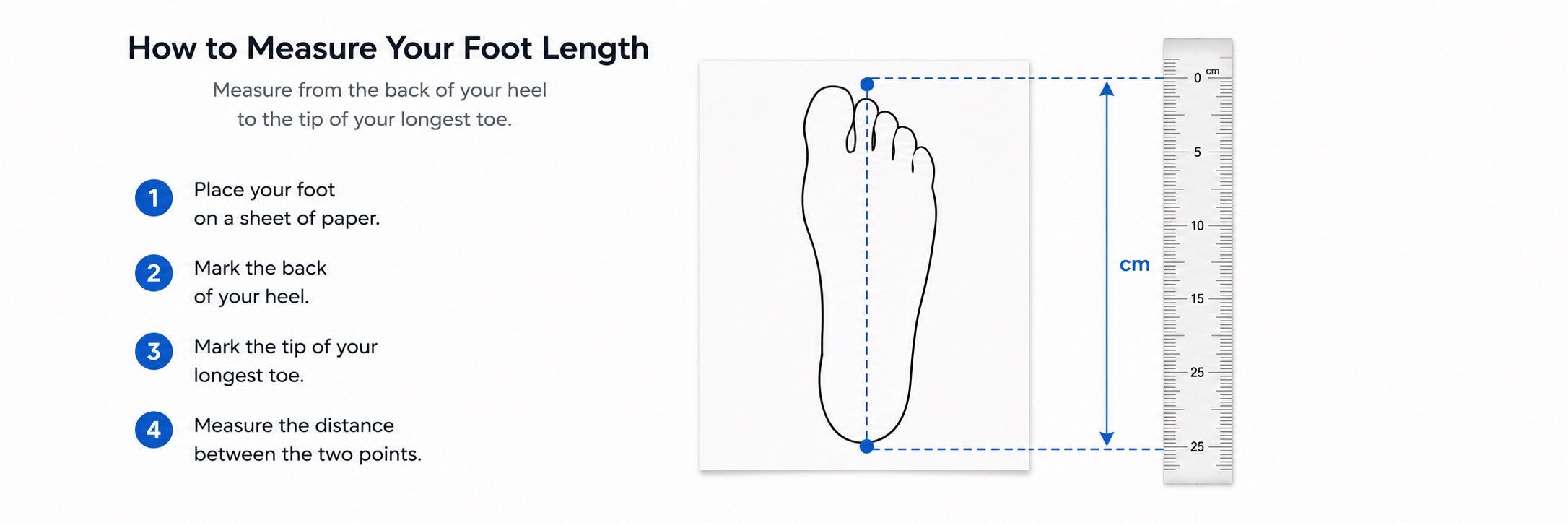
When buying shoes online, the calmest starting point is not your usual EU label but your actual foot length. Measure first, compare the result with the universal shoe size chart, and only then move on to brand-specific guidance or a particular model.
What you need
- A sheet of paper large enough for your foot.
- A pencil or pen.
- A ruler or tape measure.
- A flat floor and a few quiet minutes.
How to measure at home
Place the paper on a flat floor and stand on it with your full weight. Trace the foot or mark two points: the heel and the tip of the longest toe. Measure the distance between those points in centimetres. Repeat the process for the second foot as well. Many people have a small difference between feet, and it is safer to use the larger number when choosing size.
When to measure
It is usually better to measure later in the day. Your feet can swell slightly by evening, which gives a more realistic result for everyday shoes. If you are choosing trainers or boots, wear the socks you plan to use most often.
What to do with the result
Compare the measured length with the shoe size chart and see where it falls. If your number sits between two values, think about the fit of the model, the toe shape and whether you need a little extra room. If you also want to compare size guidance across specific labels, move on to the brand size database.
Common mistakes when measuring your foot
The most common mistake is measuring in a rush and then rounding the number down because it feels close enough. For shoes, that shortcut often leads to unnecessary returns. Another frequent mistake is relying on only one foot. Many people have a small difference between the left and right side, so the longer foot should guide the final choice.
When a universal chart is no longer enough
A universal chart is a strong starting point, but it does not replace the shape and fit logic of a specific pair. Trainers, dress shoes, winter boots and narrow loafers can all behave differently. After the initial measurement, it is worth checking brand size tables and, if needed, comparing the result with size recommendation tools.
Quick checklist before buying
- Measure both feet in the evening.
- Write the result down in centimetres, not just as an EU label.
- Start with the universal shoe size chart, then move to the brand.
- If you are between two sizes, also consider socks, season and toe shape.